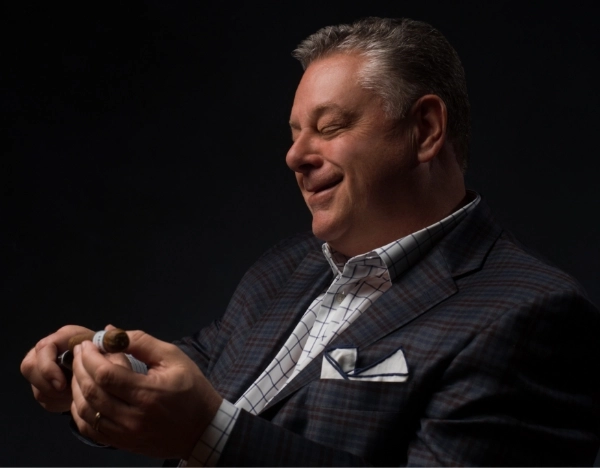
You walked out of the conference room after thirty minutes and turned to your sales leader. I like him. Three words. The decision was made.
The two remaining interviews on the schedule became formalities — questions designed to confirm what you'd already concluded. The reference checks were perfunctory. The offer went out the next day. He started in three weeks.
Nine months later, the rep is missing his number. The pipeline is thin. The deals he claimed in the interview never materialized. Your sales leader brings it up in a 1:1: we need to make a change. You sit there trying to figure out what you missed. You can't, because you weren't watching for evidence. You were watching for chemistry.
This is the fourth blind spot in The Sales Hiring Blind Spots series. Most CEOs and hiring managers form a verdict in the first thirty minutes — sometimes the first three. Everything after that is confirmation bias. The interview becomes theater. The decision becomes inevitable. The bad hire becomes the next six-figure write-off.
The Blind Spot: Believing You Can Read a Salesperson in 30 Minutes
You can't. Nobody can. And the more confident you are that you can, the more likely you are to be wrong.
The salesperson sitting across from you is a professional at being interviewed. Their entire career is structured around persuading people in conversation. They've sat in this exact chair fifty times. They know which numbers to lead with. They know how to laugh at the right moment. They know how to mirror your body language. Reading the room is their actual job skill.
You interview maybe four sales candidates a year. Your hiring manager interviews maybe twelve. The candidate is in this conversation every other week. The skill gap between you is enormous — and the one playing on home turf is the candidate, not you.
When you trust a thirty-minute read, you are betting your $235,000 hiring decision on a single round of a game the candidate has been training for since their first sales job. They will win that round. They are supposed to win that round. The question isn't whether you can outmaneuver them in conversation. You can't. The question is whether your interview process is built to evaluate evidence, or to evaluate vibes.
Most are built for vibes.
The Truth: Likability, Presence, and Confidence Don't Predict Sales Results
The traits that make a candidate impressive in the interview room are not the traits that produce revenue.
Warmth doesn't close deals. Presence doesn't survive a procurement objection. Confidence in front of a friendly hiring manager doesn't translate to confidence in front of a hostile buyer who controls a $1.2M decision. The interview rewards the social skills of the candidate. The seat rewards the sales skills. They are different skills, and one does not predict the other.
The data on this is brutal. Most sales hires fail not because they're bad people but because the interview measured the wrong thing. The candidate with the best handshake got the offer. The candidate with the best Sales DNA — the one who would have actually performed in the seat — got passed over for someone less likable.
The more your interview process relies on the room, the more it rewards the poser. The more it relies on evidence, the more it filters for the performer.
Why Teams Keep Falling for It
Three reasons:
Likability is the easiest data point to collect. Within thirty seconds of the candidate walking in, your hiring manager knows whether they "like" them. That feeling is loud. It crowds out everything else for the rest of the conversation. Other data — past behaviors, specific results, evidence of skill — requires structured questions and disciplined listening. Vibes are free. Evidence is work.
Most interviewers don't know what evidence looks like. A great interview is forensic. It hunts for specifics — names of buyers, dollar amounts of deals, words used in objections, what the candidate did at the inflection point. Most hiring managers were never trained to interview this way. They ask tell me about a time you closed a tough deal and accept the surface-level answer. They don't push for the inflection points where the rep's skill actually showed up. So the answer sounds plausible and the verdict gets made on tone.
The interview is treated as a conversation, not a process. Your team has been told the interview should be a chance to get to know each other. That framing kills the rigor. A great interview is a structured evaluation against a predetermined rubric. The candidate gets the same questions every other candidate got. The interviewer scores against the rubric, not the room. The verdict comes after the evidence is in — not in the parking lot before they've even left.
None of this is your team's fault. They were trained to interview the way most companies interview — chemistry-first, conversation-driven, gut-validated. The fix is teaching them what evidence-based interviewing looks like.
The Shift: Four Interview Disciplines
Your job is not to interview every candidate yourself. Your job is to install the disciplines that prevent your team from making thirty-minute verdicts.
Four disciplines. The team builds the interview process around them.
Discipline 1 — Score before you meet. Before the first candidate walks in, your team writes the rubric. What does great look like for this seat? What does acceptable look like? What disqualifies a candidate immediately? The rubric is the bar. It exists in writing before any candidate is evaluated. If the rubric doesn't exist, the verdict will default to whoever the team likes most — because liking is the only criterion they have.
Discipline 2 — Run the same questions across every candidate. Same questions. Same order. Same follow-up probes when answers are vague. Apples to apples. The moment your team starts improvising different questions for different candidates, the comparison becomes impossible — and the verdict reverts to gut feel. Predetermined questions force the conversation to do real work.
Discipline 3 — Score independently before discussion. Each interviewer scores against the rubric on their own — before talking to anyone else on the panel. Then the panel meets and compares scores. This kills two failures at once: the loudest voice in the room dominating the decision, and the team converging on whoever the CEO seemed to prefer. Independent scoring exposes disagreement. Disagreement is information.
Discipline 4 — Add evidence beyond the interview. No hiring decision rests on the interview alone. The interview is one data point. The other data points are a Predictive Sales Assessment that measures Will to Sell, Sales DNA, and Tactical Skills, the candidate's actual work product (a deal walkthrough, a written prospecting plan, a recorded role-play with a real buyer scenario), and structured reference calls with former managers who were responsible for their results. Three sources. The interview is one. The verdict is built from all four — not from the conversation alone.
Hand those four disciplines to your hiring manager. Tell them every sales candidate from this point forward goes through this process. The team can run that. They couldn't run let's get a feel for them. They can absolutely run a rubric, a question set, an independent scoring round, and an evidence stack.
You Aren't Looking for Reasons to Hire — You're Looking for Reasons Not To
The deeper move — and the one your team needs to internalize.
Most interviewers walk into the room hunting for evidence to confirm the candidate is good. The candidate is charming, so they look for charming. The candidate is confident, so they look for confidence. Every answer gets interpreted through the lens of this person could work.
Reverse it. Walk in hunting for evidence to disqualify. Every answer gets interpreted through the lens of this person could fail. What's the inflection point in their last big deal — and can they actually describe it? When they missed quota, what did they say caused it — themselves or the territory? When you push back on their numbers, do they get defensive or curious?
The disqualification mindset doesn't make you mean. It makes you accurate. The candidates who can withstand evidence-hunting are the ones who actually performed. The candidates who can't are the ones who manufactured a story for the interview. Both reveal themselves quickly when you stop looking for reasons to say yes.
This is the strategy your team needs from you. Without it, they will hunt for confirmation — and the poser, who is built to provide confirmation on demand, will get the offer every time.
"But What About Cultural Fit?"
Your team will worry the disciplines remove the human element. That structured interviewing kills cultural fit. That you can't measure is this someone we want to work with on a rubric.
Cultural fit is a real signal. For nine out of ten EOS companies, I recommend a culture interview before the sales interview. Here's why.
If the candidate has all the sales skills and competencies you need but they aren't aligned with your core values, the candidate is a no-go. It's much harder to walk away from a strong candidate after you've already discovered they fit the seat — and only then learn they don't fit the culture. Front-load the culture screen. Disqualify on values first. Then run the rubric on capability.
You aren't removing the human read. You're putting it in the right place. Culture comes first as a values check. The disciplines come after.
What This Costs You When the Verdict Is a Vibe
A bad sales hire in a $25M to $50M company costs $235,000 at the floor. The thirty-minute verdict compounds that cost in two specific ways most CEOs don't track.
First, the verdicts you make in the room get repeated. When the chemistry-driven hire fails in nine months, most CEOs don't connect the failure to the interview process — they conclude they "got the wrong person" and run the same broken process to find the next one. The same gut-feel verdict. The same nine-month failure. The same write-off. CEOs who hire on vibes don't fail once. They fail repeatedly, with the same root cause, and never see it.
Second, the great candidate you didn't hire. For every poser who got the offer because they were warm in the room, there was a candidate with the actual skill set who didn't interview as smoothly — and got passed over. The cost isn't only the bad hire. It's the great hire who walked away because your process couldn't see them.
Evidence-based interviewing fixes both. The rubric catches the great candidate the room misses. The disciplines catch the poser the room loves.
What to Set This Week
Three actions to take as the CEO setting the strategy — none of them require you to interview anyone yourself:
Have your hiring manager build the interview rubric for the open seat. Three columns: great, acceptable, disqualifying. What does each look like in evidence terms — not feeling terms? The rubric should fit on one page. Once it exists, the team has a decision-making instrument they didn't have before.
Lock the predetermined question set. Same questions, same order, every candidate. Eight to ten behavioral questions tied to the rubric — each one with structured follow-up probes that force candidates past surface answers. Hand the question set to every interviewer on the panel. Improvisation kills comparison.
Decide what evidence beyond the interview is non-negotiable. Assessment data. Work product. Reference calls. Tell your team the verdict requires evidence from every source — not just the interview. If the team can't show you the evidence stack, the candidate doesn't get an offer. That single rule prevents the thirty-minute verdict from happening.
The goal isn't to be a better interviewer. The goal is to install a process that doesn't rely on you being a great interviewer at all.
The Diagnosis Goes Deeper Than One Blind Spot
The 30-Minute Verdict is the fourth of eight blind spots in sales hiring. Each one is a false belief CEOs and their teams don't know they hold. Each one creates a constraint on what the team can see, evaluate, or act on. Each one has a shift that removes it.
The full diagnosis — and the full set of shifts — is in Inside Out: Why Strong EOS Companies Have Weak Sales Teams. It's the framework you set. Your team executes it. You stop being pulled back into the hiring process.
The next bad hire is closer than you think. The verdict is yours to slow down. Slow it down.
— Walter Crosby, The Sales Integrator™
P.S. — Inside Out is the diagnosis. The full system is Sales Hiring Secrets. If you want to see how it works before you commit to a book or a call, watch the free 60-minute training: 7 Strategies to Hire Salespeople Who Actually Sell. Watch the training here.